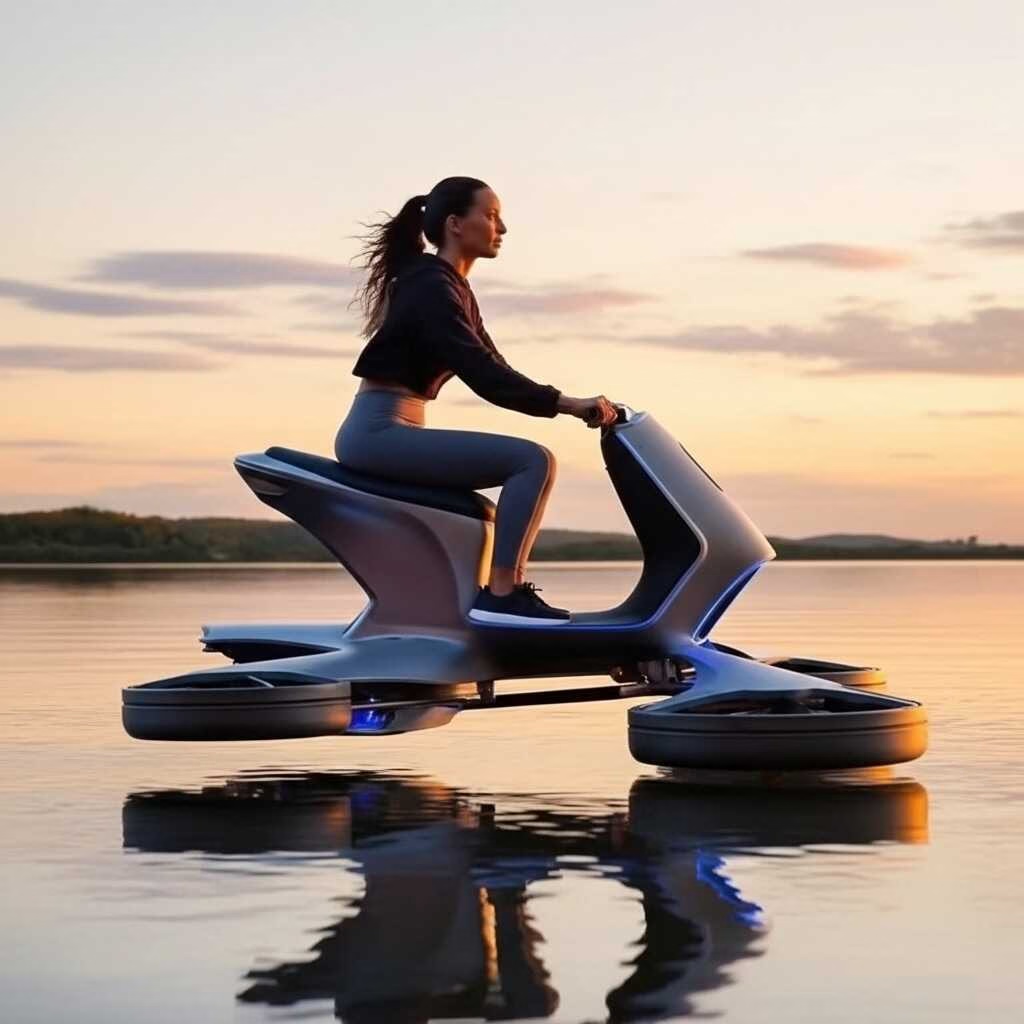
The Problem: Grounded by Gridlock
Our cities are choking on congestion. The “last-mile” commute—from the subway station to your office, or from your apartment to the grocery store—is often the most inefficient part of our day. E-scooters solved part of this problem, but they still share the road with cars, cyclists, and pedestrians. They are bound by asphalt.
The Concept: Introducing the “AeroGlyde” (A Scooter Drone You Can Ride)
This is where the “scooter shaped drone” concept truly takes flight. I envision a product not as a toy, but as a revolutionary mobility tool. Let’s call this concept the “AeroGlyde V-1”.
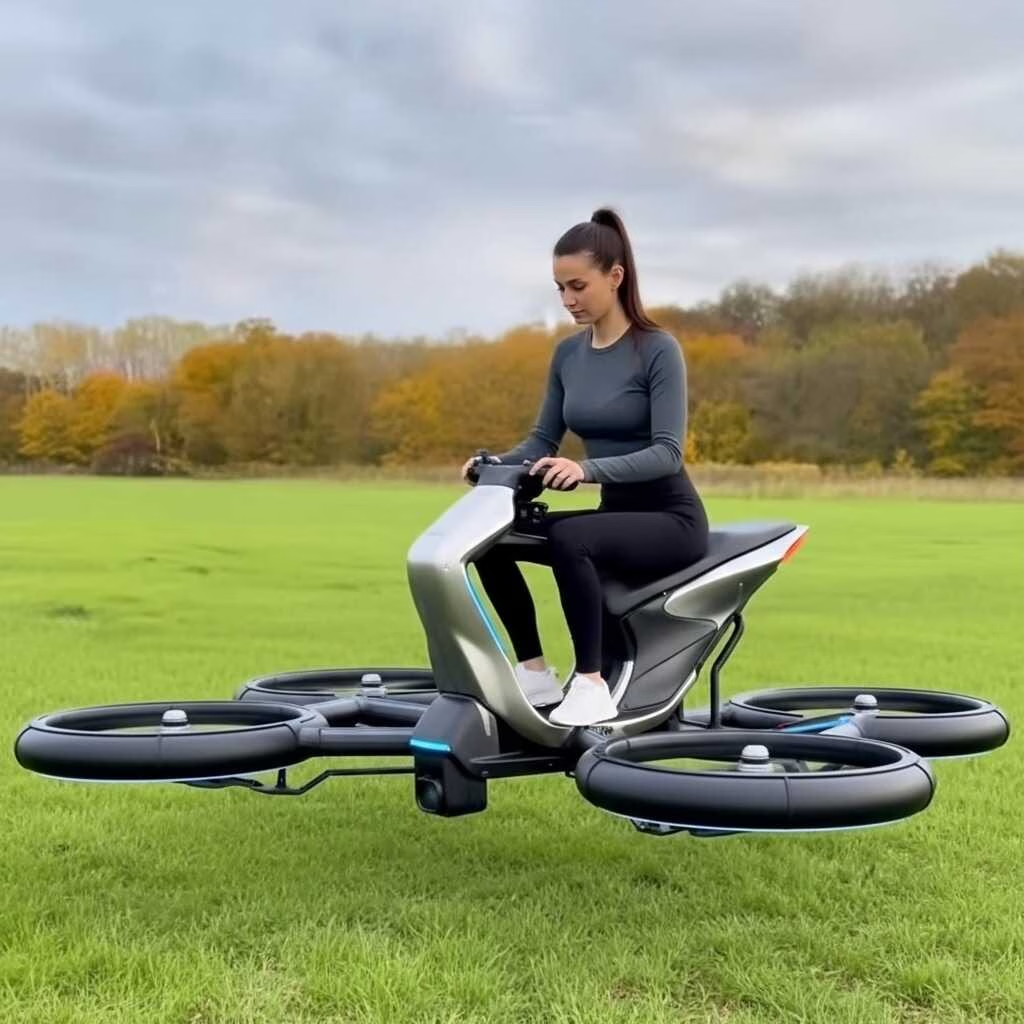
The AeroGlyde Concept: A lightweight, electric, personal aerial vehicle that fuses the intuitive controls and form factor of an e-scooter with the quad-copter technology of a heavy-lift drone.
It’s designed for one purpose: to lift you 1-3 meters (3-10 feet) off the ground and “glide” you over obstacles, traffic, and congestion for short urban journeys.
Core Features of a Personal Scooter Drone
- Intuitive Scooter Controls: It retains the familiar handlebars for steering and a deck to stand on. Leaning, accelerating, and braking feel natural to anyone who has used a scooter or bike.
- AI-Powered Stabilization: You don’t need a pilot’s license. An advanced AI-driven flight controller manages all the complex stabilization, takeoff, and landing, simply responding to your directional inputs.
- Ducted Fan Propulsion: Instead of exposed propellers, it would use safer, quieter, and more efficient ducted fans, making it suitable for urban environments.
- Collision Avoidance: LiDAR and vision sensors create a 360-degree safety bubble, preventing collisions with buildings, pedestrians, or other “glyders.”
- Foldable & Portable: Like its grounded counterparts, the AeroGlyde would be designed to fold, allowing you to carry it into a building or charge it under your desk.
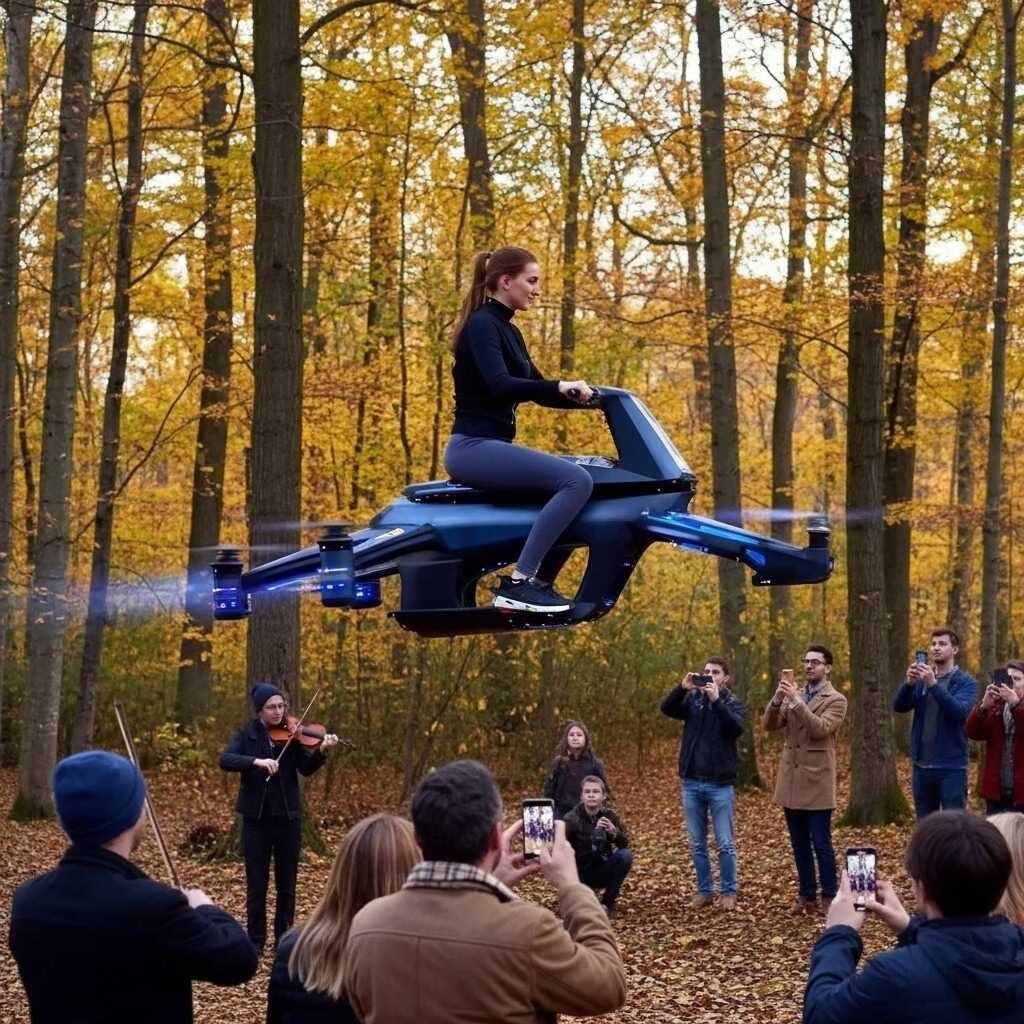
Why a Flying Scooter? The Benefits Are Clear
This isn’t just about the “cool” factor; it’s about practicality:
- Zero Traffic: It completely bypasses ground-level congestion. Your commute time becomes predictable and dramatically shorter.
- Point-to-Point Travel: It offers true “as the crow flies” travel. Need to cross a river or a park? Go over it.
- Eco-Friendly: Being fully electric, it has zero direct emissions, contributing to cleaner city air.
- Accessibility: By automating the flight, it becomes accessible to a wider audience than complex personal aircraft.
The Takeaway: The Drone Isn’t the Toy, It’s the Transport
So, the next time you see “scooter shaped drones,” look past the idea of a simple toy. The real, disruptive concept is a vehicle that leverages the power of drone technology to fundamentally change how we move. The “AeroGlyde” is a new category of vehicle, blending the freedom of flight with the practicality of a scooter. This is the future of the “last-mile” commute.